A New Paradigm for Egocentric Data: How Wrist Cameras Solve Fine-Grained Manipulation Challenges
With the rapid advancement of Vision-Language-Action (VLA) models, Physical AI, and World Models, embodiment-agnostic human data is increasingly becoming a critical foundation for model training.
Compared to teleoperation data, human data offers coverage of diverse task types, complex manipulation strategies, and unstructured real-world environments. It also scales more effectively for long-tail tasks in the real world. Consequently, the methods for capturing human data are continuously evolving, from hardware-agnostic solutions like UMI (Universal Manipulation Interface) to head-mounted egocentric camera setups.
However, a core technical challenge remains: Does an egocentric camera alone record sufficient information to train models on fine-grained human-to-world interactions?
Challenges in Egocentric Visual Data
In robotics, the concept of a wrist-mounted camera (Eye-in-Hand) has been a foundational component for decades, supporting tasks from industrial visual servoing and precision assembly to robotic grasping and bin picking. By tracking the robot's end-effector continuously, a wrist camera captures critical, localized information that is frequently obscured from head-mounted first-person or external third-person viewpoints.
When relying solely on an Ego Camera, AI models face specific data limitations:
-
Occlusion: Head-mounted cameras often lose sight of the precise contact point between the hand/effector and the object during close-up manipulation.
-
Loss of fine-grained attributes: Subtle variations in an object's local shape, pose, surface texture, and material composition are difficult to capture from a distance.
-
Background noise: Standard egocentric frames include a high ratio of task-irrelevant environmental data, which can cause models to rely on accidental background cues rather than core manipulation mechanics.
Integrating a wrist camera into the data collection architecture addresses these visual limitations through several distinct technical advantages:
-
Optimized object-to-pixel ratio: The target object occupies a significantly larger portion of the frame, preserving dense visual features essential for deep learning.
-
Dedicated interaction focus: The field of view remains structurally locked onto the precise location where physical interaction occurs, naturally filtering out environmental noise.
-
Continuous target tracking: Because the sensor moves in tandem with the hand, target objects are prevented from slipping out of the frame during complex operational sequences.
-
Visual distribution consistency: The localized visual data remains highly uniform across different settings, offering superior robustness against background shifts and environmental variations.
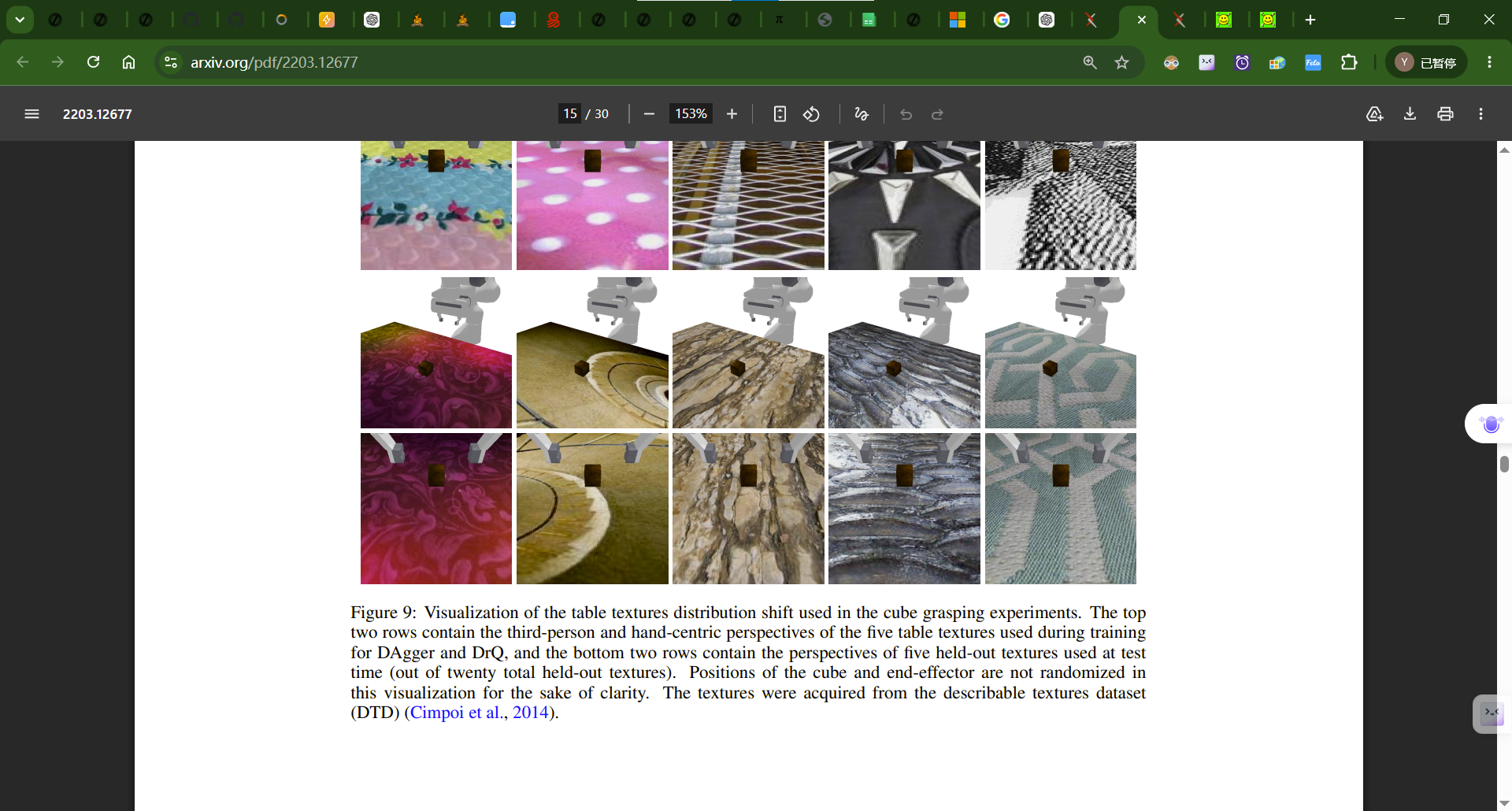
The Value of Wrist-Mounted Modalities
These structural advantages are not exclusive to robotic platforms.
In the paper "Emergence of Human-to-Robot Transfer in Vision-Language-Action Models", researchers augmented standard egocentric human datasets with an additional wrist-worn camera. The empirical results demonstrated that in manipulation tasks requiring precise observation of hand movements, the integration of wrist camera data significantly boosts model performance.
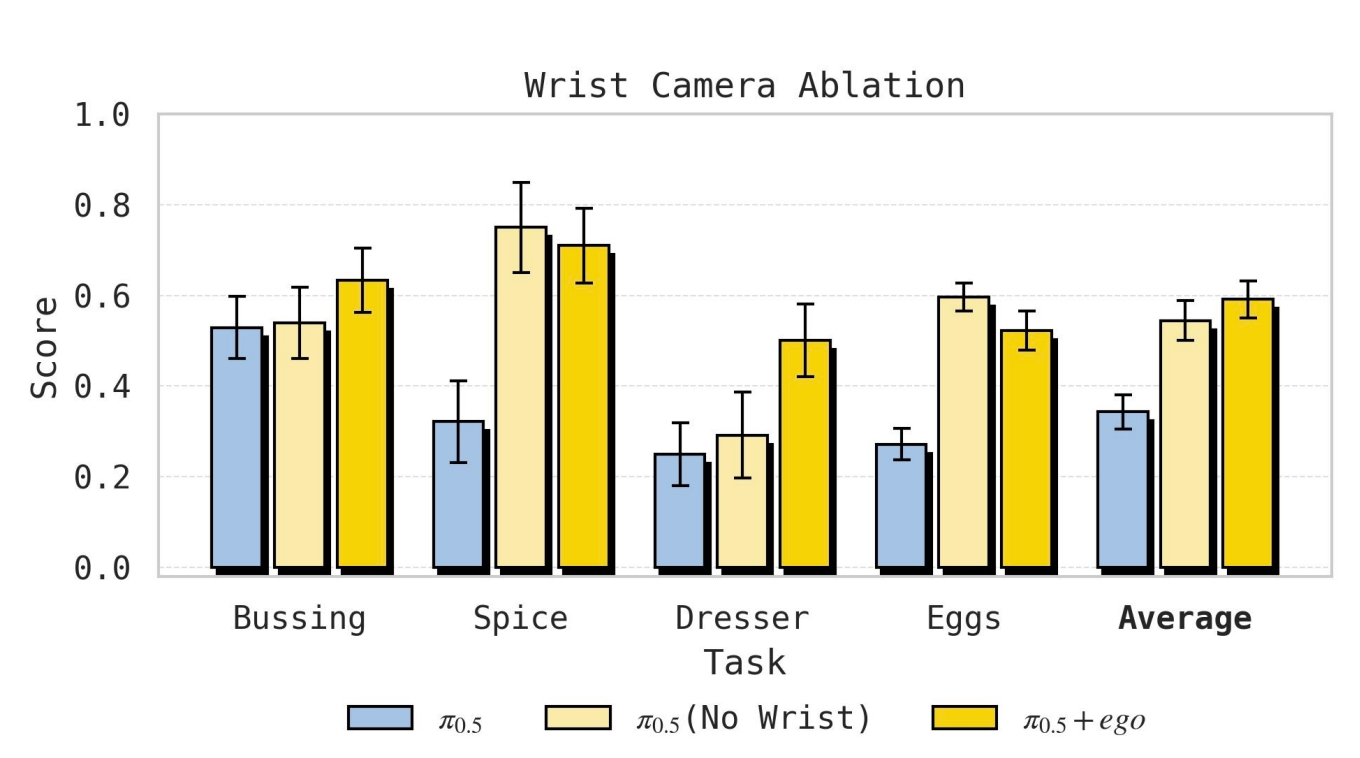
While dedicated research into human-worn wrist cameras remains relatively nascent, the extensive accumulated experience in robotics coupled with these initial human trials points toward a definitive industry trend: In fine-grained manipulation tasks, localized interaction data is itself a vital, non-negotiable data modality.
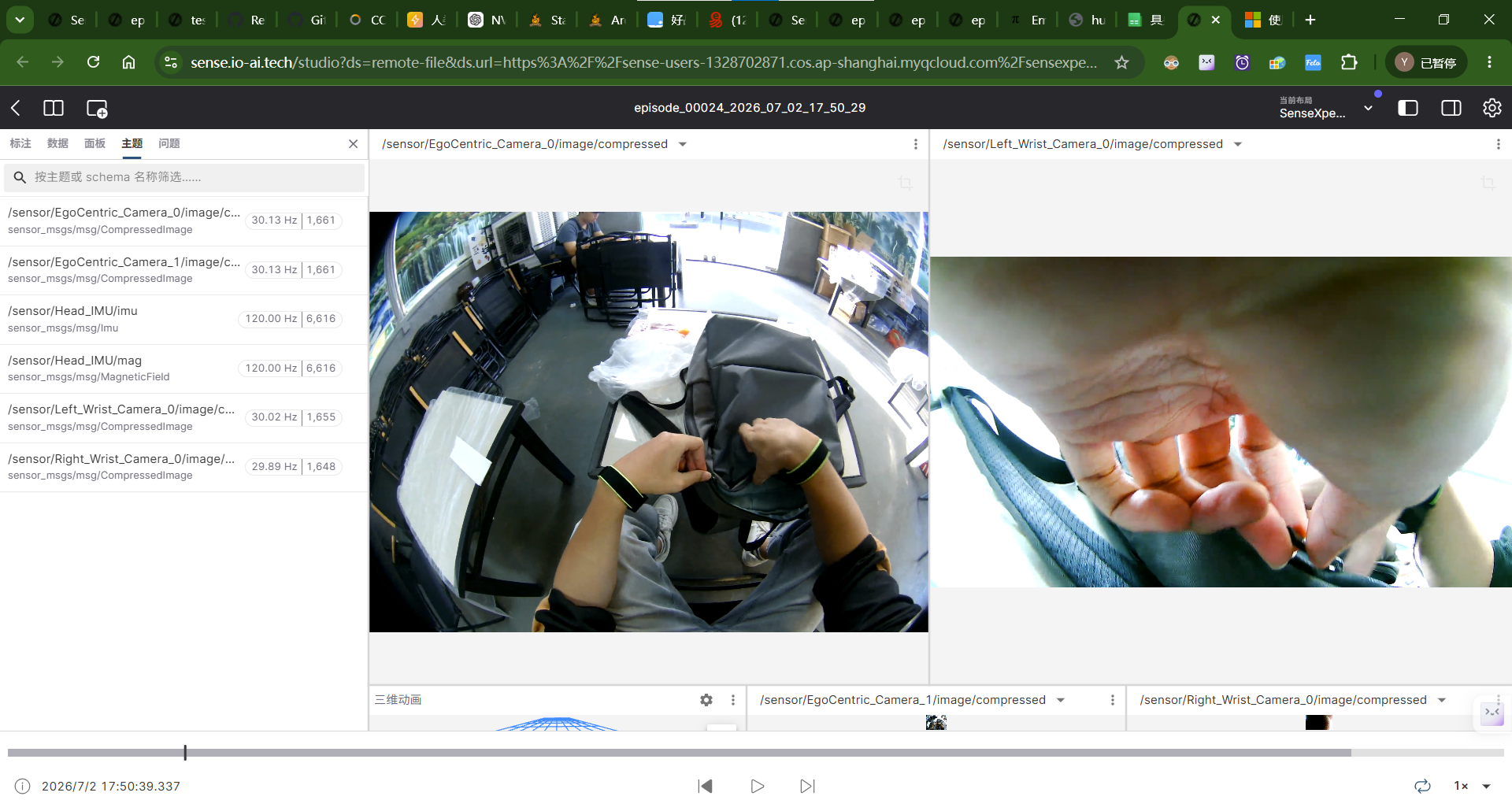
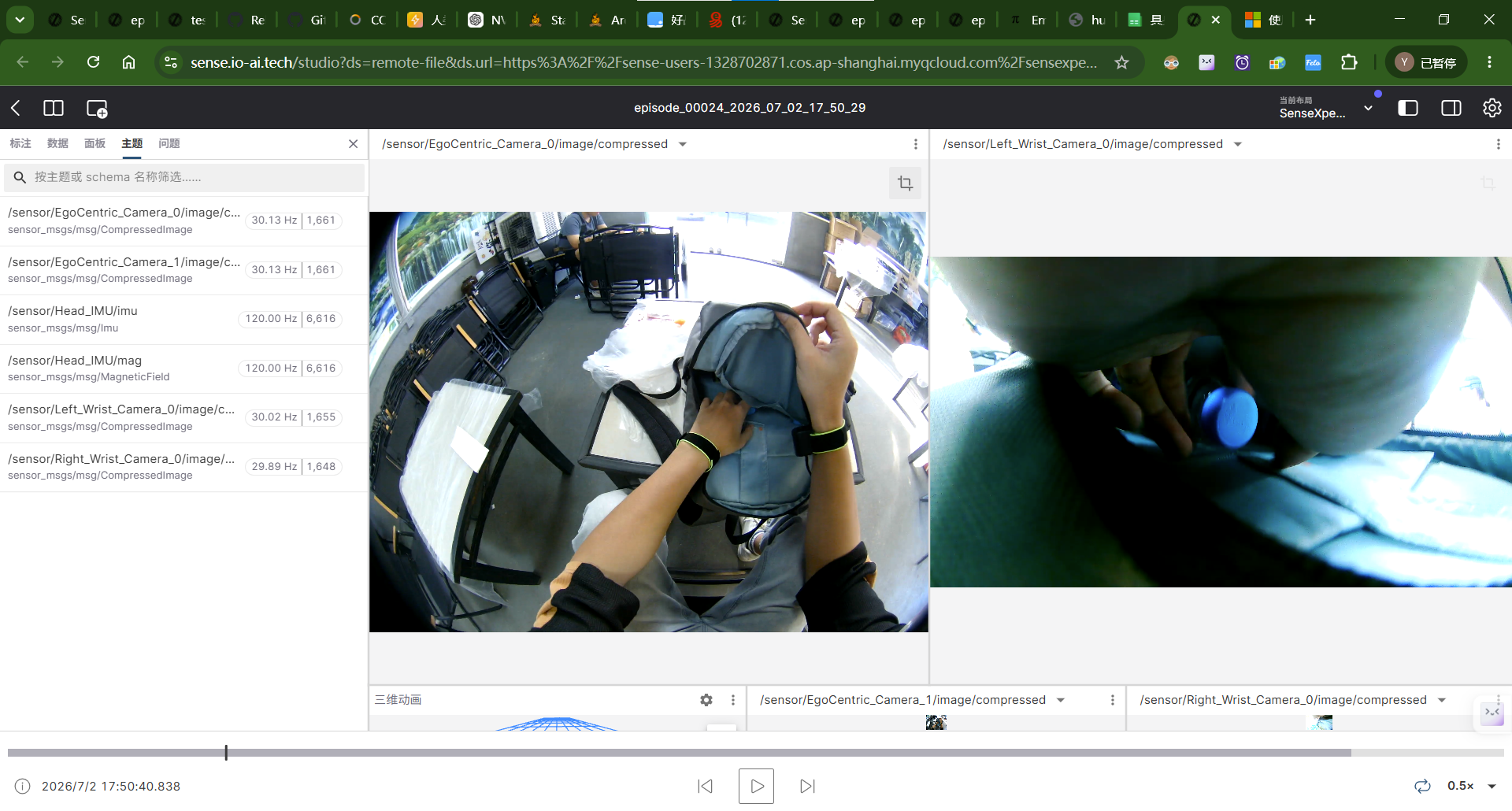
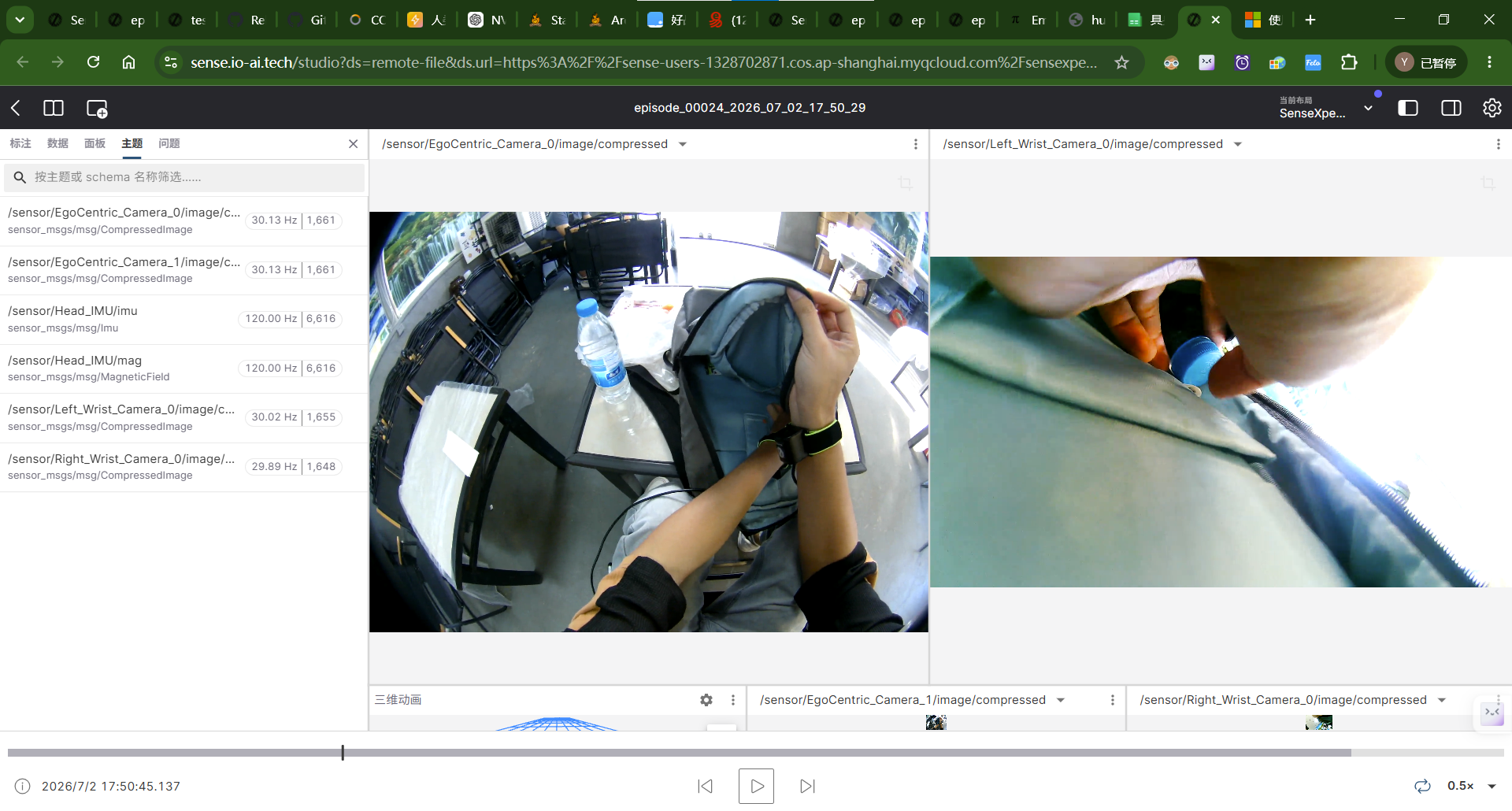
During empirical data collection deployments, a significant phenomenon observed in bimanual (dual-arm) collaborative tasks is the natural synergy between opposing wrist sensors.
Because the left and right wrist cameras are mounted on separate arms, they continuously capture each other’s manipulation processes from alternating angles. For example, when one hand's interaction zone is occluded from the perspective of the head-mounted egocentric camera or its own wrist sensor, the opposite wrist camera frequently retains an unobstructed view.
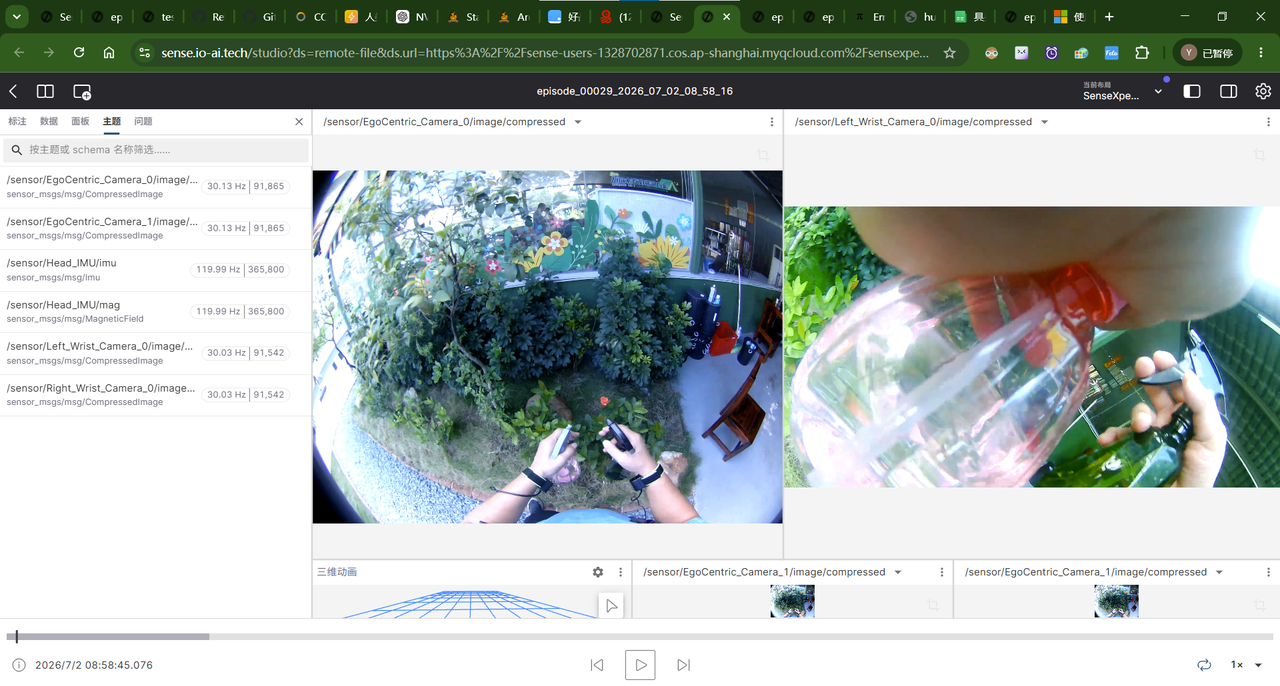
This mechanism successfully records the precise contact actions, object state changes, and dual-arm coordination metrics, achieving a level of multi-view complementarity that cannot be replicated by simply increasing the resolution of a single head-mounted sensor.
Redefining the Vision: What Humans See vs. What Actually Happens
We believe that as Embodied AI matures, human data collection must transcend merely recording what humans see (Global Context) and move toward capturing what actually happens during manipulation (Local Physical Interaction).
For next-generation VLAs, Physical AI, and World Models, understanding the broader task is only half the battle; models must grasp the fine-grained physical mechanics of human-to-world interaction.
-
Egocentric camera provide global semantics and task context—helping the model understand where and why a task is happening.
-
Wrist cameras deliver localized physical interaction details—helping the model understand how the operation is mechanically executed.
For next-generation Embodied AI frameworks, these two distinct data modalities are structurally complementary and equally essential for robust model training.
SenseXperience: Real-World Human Data Collection System
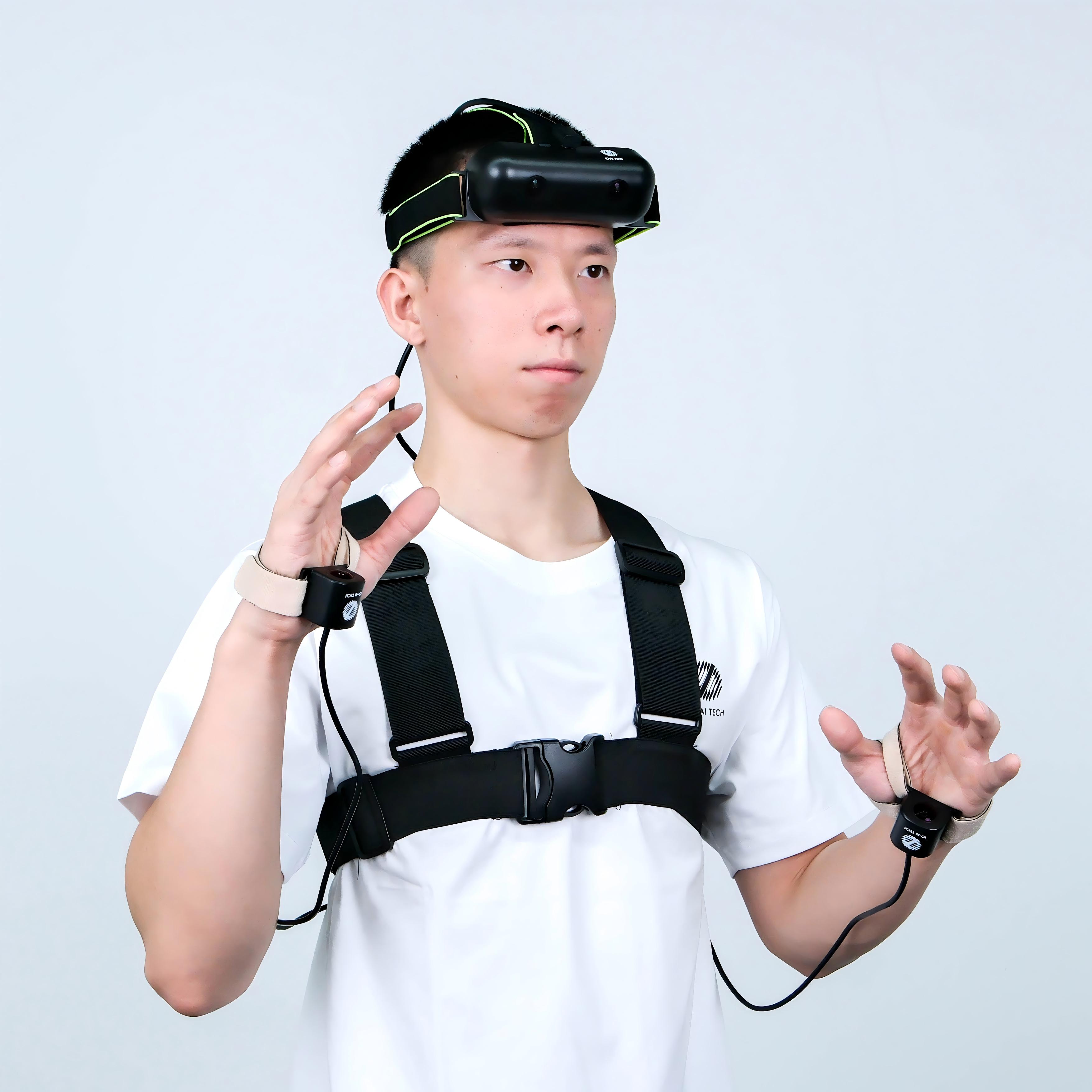
Driven by this paradigm, we designed SenseXperience , a lightweight, wearable data collection ecosystem paired with a robust storage system. Built to integrate seamlessly into everyday life and work without disrupting the user, SenseXperience has already powered the accumulation of millions of real-world human interaction data samples.
The SenseXperience product suite includes specialized modules for the head, wrist, and grippers, allowing them to be deployed independently or configured together as a unified system.
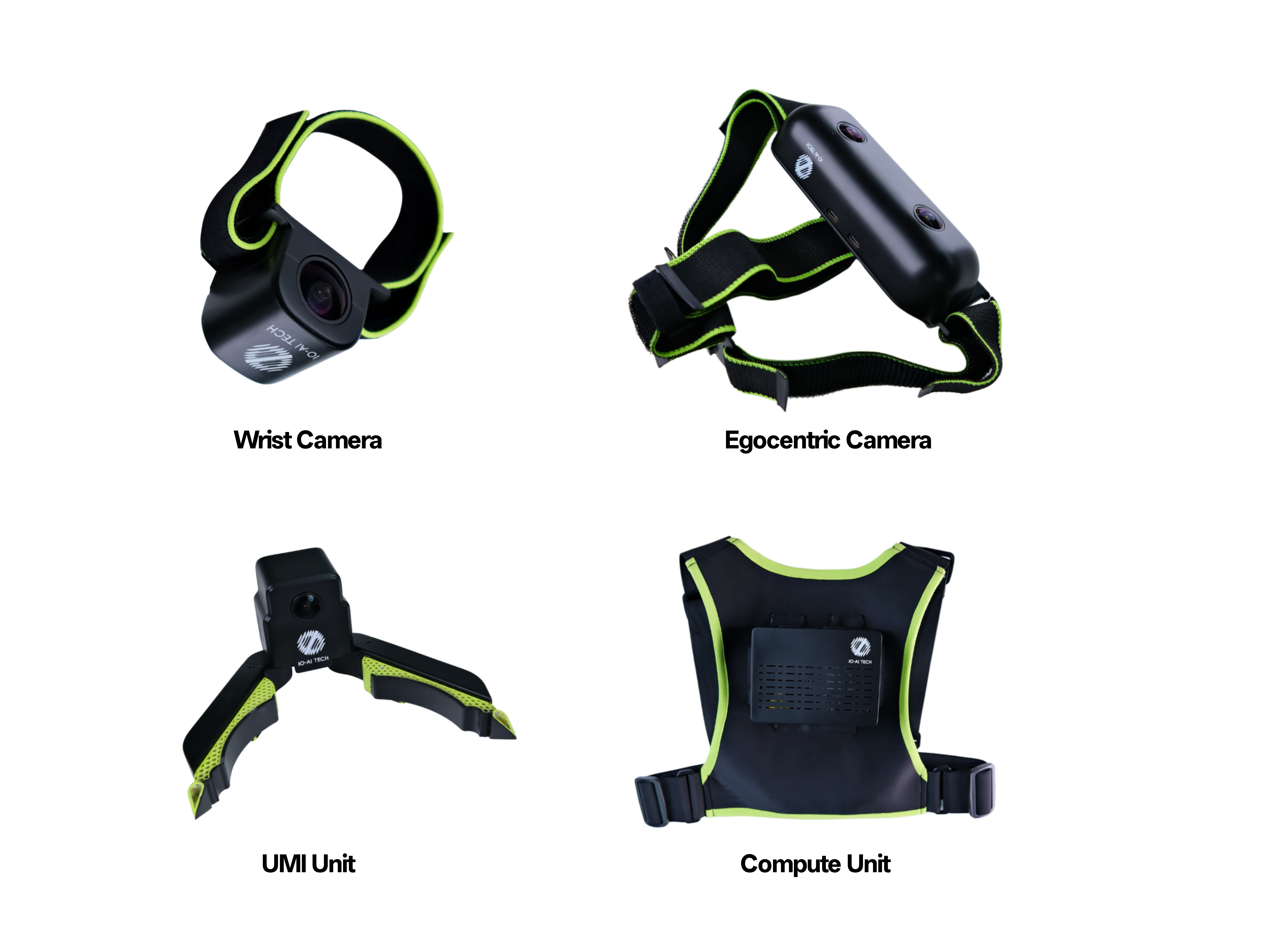
The wrist module utilizes two specialized strapping configurations tailored to different operational requirements:
-
Palm configuration: The camera tracks in direct alignment with the hand anatomy, ensuring that palm articulation and detailed motion dynamics are fully represented in the visual stream.
-
Wrist configuration: Positioned at a calculated offset from the hand to prevent visual occlusion when the user is gripping or wrapping around larger physical objects.
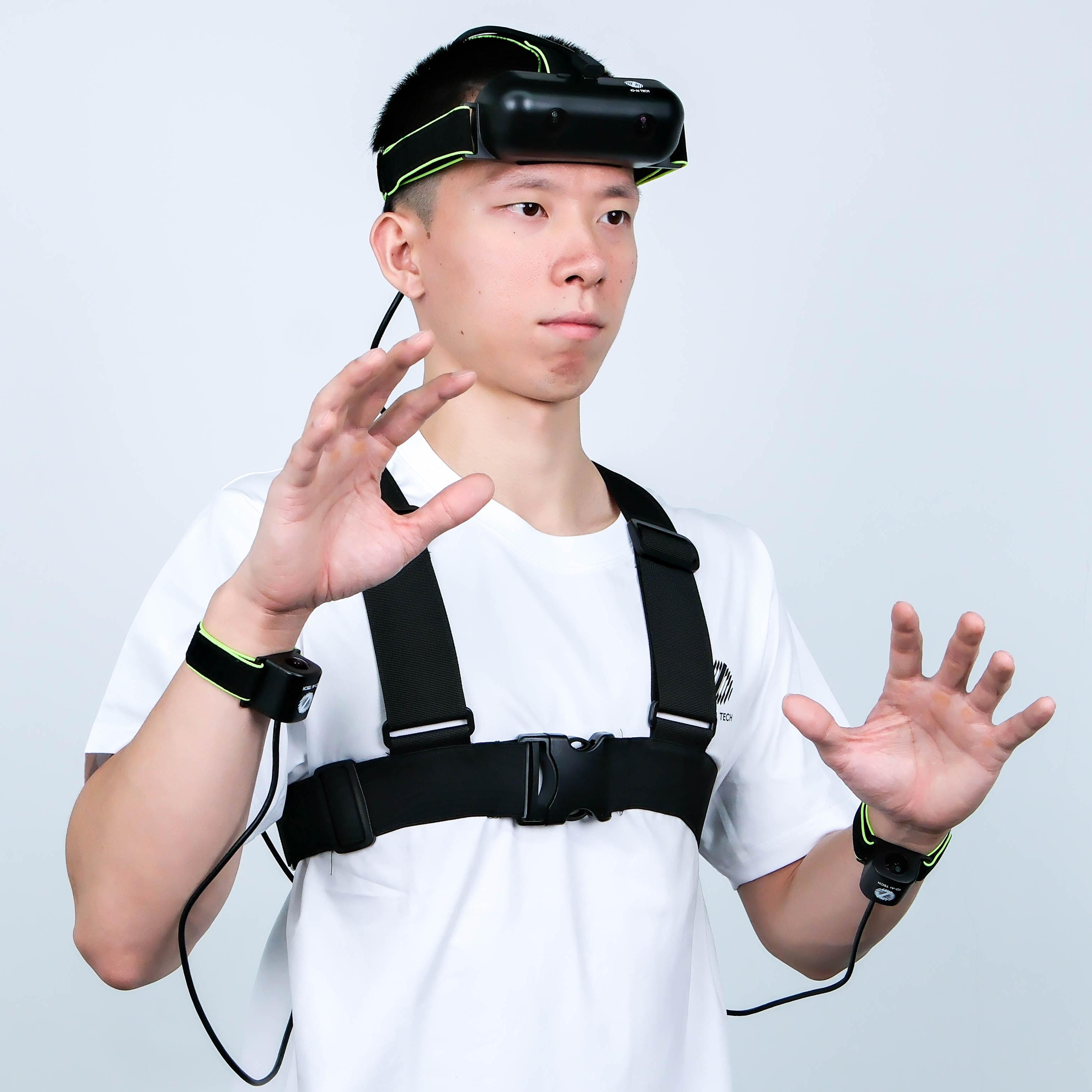
Data captured via the SenseXperience hardware is ingested directly into the EmbodiFlow data platform. This software pipeline automatically executes essential post-processing workflows and quality assurance.
EmbodiFlow outputs structured data in formats fully compatible with standard robotics research frameworks, including LeRobot, MCAP, and HDF5, significantly reducing upstream data preparation overhead for machine learning teams.
Next Steps and Sample Data
We have made a dedicated SenseXperience Sample Dataset with wrist camera data available for download to support your research and evaluation:
- Download Sample Dataset: Access the repository on Hugging Face: https://huggingface.co/datasets/io-intelligence/SenseXperience_WristCam_SampleData
To seamlessly preview and inspect these files, you can also utilize ROSView (https://rosview.com/), an open-source robotic data visualization platform developed by IO-AI.
ROSView is a browser-based visualization tool specifically engineered for robotics and Embodied AI development workflows. Supporting a wide array of robotic data formats, it features a comprehensive suite of interactive panels alongside high-performance playback capabilities optimized for large-scale datasets. By introducing ROSView to the community, IO-AI aims to provide developers with an intuitive, open, and continuously evolving foundational tool for the offline visualization of complex embodiment data.
Learn more about the SenseXperience product line and access technical documentation and access full product specifications here: https://io-ai.tech/en/sensexperience/spec/
References
-
Vision-Based Manipulators Need to Also See from Their Hands (ICLR 2022) — The first study to systematically validate the advantages of wrist cameras in robotic manipulation tasks.
-
Giving Robots a Hand: Learning Generalizable Manipulation Policies from Human Videos (CoRL 2023) — Explores the value of the wrist view and human demonstrations for robot learning.
-
Rethinking Camera Choice: An Empirical Study on Fisheye Camera Properties for Robot Manipulation (CVPR 2026) — Analyzes the advantages of wrist cameras in robot learning from the perspective of camera placement.
-
Emergence of Human-to-Robot Transfer in Vision-Language-Action Models (2025) — Demonstrates that adding wrist camera data to human egocentric (Ego) data can enhance human-to-robot transfer performance.